Cyclocross Skills & Training
Practical cyclocross skills, training advice and coaching from Precision Cycling Coaching.
Ride Faster. Race Smarter. Master Cyclocross.
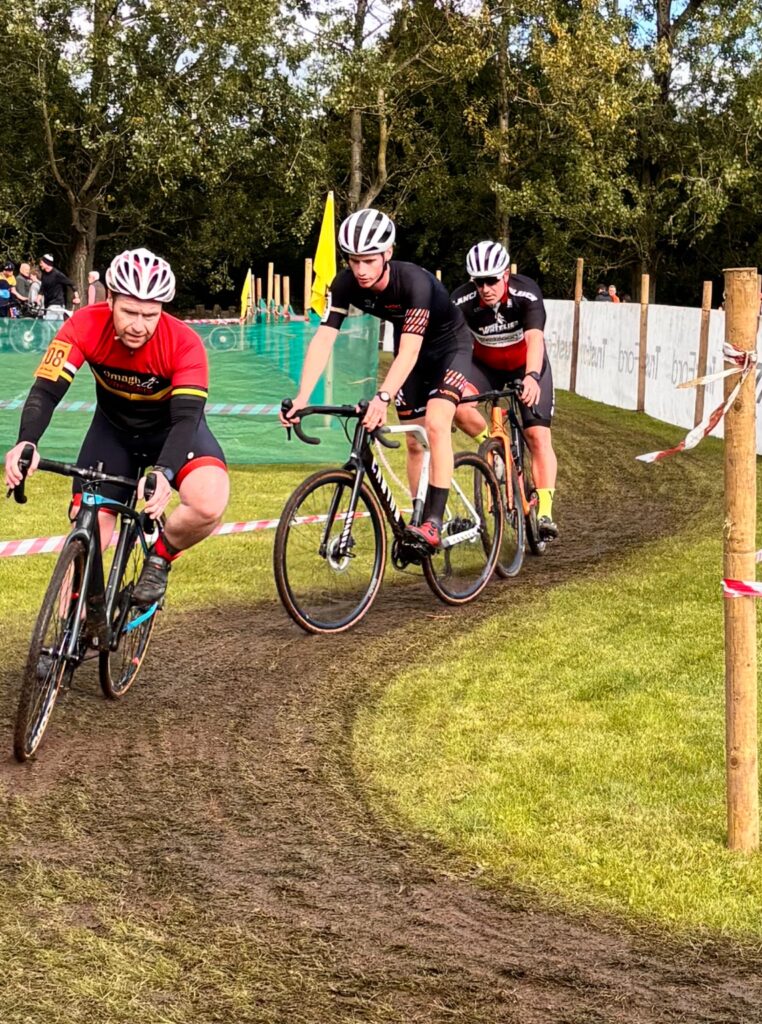
Practical cyclocross skills, training advice and coaching from Precision Cycling Coaching.
Whether you're completely new to cyclocross, preparing for your first race or looking to improve your performance, there's one thing worth remembering:
You don't always need to become fitter to become faster.
Cyclocross rewards confidence, good technique, smart decisions and the ability to carry speed across changing terrain.
Sometimes, a small improvement in how you approach a corner, brake or accelerate can make a surprisingly big difference.
At Precision Cycling Coaching, we help riders develop those skills through practical, supportive coaching built around their individual experience and ability.
1. The One-Minute Gain - Get Faster Without Getting Fitter
Here's something to think about.
Imagine riding your next cyclocross race over a minute faster without producing any additional power.
How?
Let's say a cyclocross course has 30 corners per lap, and you complete seven laps.
If you improve your technique enough to save just half a second through each corner, the potential time saving is:
30 corners × 7 laps × 0.5 seconds = 105 seconds.
That's 1 minute and 45 seconds !!
Of course, every course is different, and you won't necessarily gain time on every corner. But it illustrates something important.
Small technical improvements, repeated throughout a race, can add up to a substantial advantage.
And there's another benefit.
When you carry more momentum through a corner, you don't need to accelerate as hard afterwards. That can save you energy as well as time.
Five ways to find your free speed
Brake before the corner.
Try to complete most of your braking before you begin turning. Braking too heavily halfway through a corner can cost momentum and make the bike harder to control.
Look where you want to go.
Keep your eyes focused towards the exit, rather than staring directly in front of your wheel.
Choose a smooth line.
The shortest route isn't always the fastest. Sometimes a slightly wider approach gives you a smoother, faster exit.
Stay relaxed.
Keep your arms and upper body relaxed. Allow the bike to move beneath you rather than fighting every movement.
Accelerate smoothly out of the corner.
Once the bike begins to straighten and you've got sufficient grip, start applying power again.
The objective isn't simply to enter corners faster.
The goal should be to come out of corners faster, with less wasted energy.
Try it yourself
Find a safe grassy area and mark out a corner using two or three cones.
Ride through it several times at a comfortable pace.
On each attempt, focus on one thing: braking earlier, looking further ahead or maintaining a smoother line.
Don't chase speed immediately.
Build confidence and control first. Speed will follow.
2. Building Confidence on Your Cyclocross Bike
If you're new to cyclocross, some sections of a course can feel intimidating.
Mud, slippery grass, tight corners, cambers and uneven ground all challenge your balance and bike-handling skills.
But confidence isn't something you either have or don't have.
Confidence develops through practice, repetition and learning to trust your technique.
Start with manageable challenges and gradually build from there.
Three simple things to practise
Balance and control: Ride slowly across grass, keeping your eyes up and your upper body relaxed.
Controlled braking: Practise reducing speed smoothly without grabbing the brakes suddenly. Learn how your bike responds on different surfaces.
Gentle cornering: Set out a simple figure-of-eight circuit using cones and concentrate on smooth turns rather than speed.
Repeat these exercises regularly.
You'll often be surprised how quickly your confidence improves.
3. Cornering - Where Races Can Be Won or Lost
Watch experienced cyclocross riders and you'll often notice how smoothly they negotiate corners.
They don't necessarily look as though they're working harder.
Instead, they maintain momentum and avoid unnecessary braking and acceleration.
For beginners, the most important starting point is control.
As your technique improves, you can gradually increase your speed.
What to remember
• Look towards the exit of the corner.
• Brake early and smoothly.
• Keep your body relaxed and balanced.
• Choose a line that gives you confidence and grip.
• Keep your outside pedal down where appropriate for stability and clearance.
• Begin accelerating when the bike is sufficiently upright and traction allows.
• On slippery or off-camber terrain, grip and control always take priority.
A smooth corner is often a fast corner.
4. Starts, Dismounts and Remounts
Cyclocross involves more than simply riding quickly.
Race starts, obstacles, running sections and remounting your bike are all important parts of the sport.
For beginners, these skills should be introduced gradually.
Race starts
Practise selecting an appropriate starting gear, clipping into your pedals and accelerating smoothly.
You don't need to sprint flat-out immediately. Begin by developing a reliable, controlled start.
Dismounting
Learn how to slow down, unclip and step off your bike safely.
Start on flat grass, away from obstacles, before progressing to more demanding situations.
Remounting
Practise getting back onto the bike smoothly and safely.
There's no need to rush or attempt an advanced jumping remount before you're ready.
The aim is to develop confidence and coordination.
Smooth first. Fast later.
5. Training for Cyclocross - It's Not All About Fitness
Cyclocross is a demanding sport.
You need the aerobic fitness to sustain your effort, the ability to accelerate repeatedly and the technical skills to negotiate challenging terrain.
Good cyclocross training develops all three.
Your aerobic engine
Endurance riding helps build the fitness needed to maintain a strong effort throughout a race.
Your ability to accelerate
Cyclocross involves repeated changes in speed, particularly after corners and obstacles.
Developing the ability to produce these efforts repeatedly is an important part of race preparation.
Your technical skills
Good technique allows you to use your fitness more effectively.
And unlike many physical adaptations, technical improvements can sometimes become noticeable relatively quickly.
A simple skills-based training session
Find a safe grassy area and create a short circuit with several corners.
Warm-up: 15 minutes of easy riding.
Main session: Ride three repetitions of three minutes around your circuit at a controlled, moderately challenging pace, with three minutes of easy recovery between each.
Cool-down: 10 minutes of easy riding.
Concentrate on maintaining smooth cornering and good technique throughout.
If you're completely new to cyclocross, keep the effort easy and focus entirely on bike handling.
The objective isn't to exhaust yourself.
It's to become a better, more confident rider.
6. Race Day - Five Simple Things to Remember
1. Inspect the course beforehand.
Before racing, take time to inspect the course. Cyclocross circuits are constantly changing, particularly when conditions become wet, muddy or slippery.
During your course reconnaissance, look for:
Cornering: Identify your entry and exit lines. Where should you brake, and where can you begin accelerating?
Terrain: Look for slippery roots, off-camber sections, ruts, steep climbs and descents.
Gear selection: Identify areas where choosing the correct gear early will help maintain momentum.
Tyre pressure: Put slightly more pressure in your tyres than you need, then adjust pressures on course - its easier to remove pressure than add it. Bring a mini pump in case you add too much and need to add a small amount.
Overtaking opportunities: Look for wider sections where you can safely move past other riders.
The race start: Understand the opening straight, first corner and potential bottlenecks. Practice a couple of starts on the actual start area.
Coaching tip: Don't simply ride around the course. Think about how you can ride each section more efficiently. Sometimes the fastest line isn't the shortest line..
2. Check your bike.
Make sure your brakes, gears and tyres are in good working order. Consider tyre pressures appropriate to the conditions, your equipment and your experience.
3. Warm up properly - prepare your body to race.
Cyclocross is unusual because riders often go from standing still to an extremely high intensity within seconds.
A good warm-up gradually increases your heart rate, prepares your muscles and helps you become mentally ready for the effort ahead.
Example 15–20-minute warm-up:
5 minutes of easy pedalling, gradually increasing intensity.
5 minutes of progressive riding towards a moderately hard effort.
3–5 minutes incorporating two or three short accelerations of 10–15 seconds, with easy recovery between efforts.
Finish with easy pedalling before heading towards the start.
Adjust the warm-up to your age, fitness and racing experience.
Try to finish reasonably close to your start time, avoiding long periods standing around getting cold.
Coaching tip: Your warm-up should prepare you for the race, not leave you fatigued before you've even started.
5. Warm Down - Don't Just Stop and Go Home.
After a hard cyclocross race, it's tempting to climb off the bike and head straight for the car.
However, taking a few minutes to wind down and begin your recovery routine is a good habit.
What should you do?
- Ride easily for approximately 5–10 minutes where practical, allowing your breathing and heart rate to settle gradually.
- Remove wet or muddy clothing and change into warm, dry kit as soon as possible.
- Put on a warm jacket, hat and additional layers, particularly during cold winter racing.
- Begin replacing fluids lost through sweating.
- Start thinking about your recovery nutrition.
Easy pedalling can help you transition comfortably from racing to rest, although it isn't a guaranteed way to prevent muscle soreness or accelerate recovery.
Coaching tip: Bring a separate bag containing warm, dry clothing and recovery food. Make it part of your normal race-day preparation.
6. Post Race Recovery Nutrition
Following a cyclocross race, your body needs to replenish energy stores, repair muscle tissue and replace lost fluids.
The first 30 minutes after racing provide the best opportunity to begin that process.
Following exercise, your muscles are particularly receptive to carbohydrate replenishment. This is especially relevant if you have another race or demanding training session later that day.
However, the 30-minute window isn't a strict deadline. If you're only racing once and eating a proper meal within the next couple of hours, your overall daily nutrition is generally more important.
Three important recovery components:
Carbohydrates – Replace Energy
Cyclocross racing uses substantial amounts of stored carbohydrate, known as muscle glycogen.
Carbohydrate-rich foods help replenish these stores.
Good choices include bananas, sandwiches, cereal, rice, pasta, bagels and recovery drinks.
Protein – Support Muscle Repair
Hard racing places considerable stress on your muscles.
Protein provides the amino acids needed for muscle repair and adaptation.
For many adult riders, approximately 20–30 g of protein after racing is a useful target.
Good choices include milk, yoghurt, eggs, chicken, tuna or a protein-rich recovery drink.
Younger riders should focus on eating sufficient nutritious food appropriate to their age and needs rather than following adult supplement targets.
Fluids – Rehydrate
Even during cold-weather cyclocross racing, you lose fluids through sweating and breathing.
Begin drinking after racing, adjusting your intake to the conditions, your thirst and how much you've sweated.
Water is suitable for most shorter sessions. Electrolytes may be useful after particularly sweaty efforts.
7. Enjoy the experience.
Cyclocross is challenging, unpredictable and occasionally frustrating. That's part of what makes it such a fantastic sport.
Remember: you don't need to ride every section perfectly. You just need to keep learning and improving.
Want to Improve Your Cyclocross Skills?
Individual and Small-Group Coaching
You don't need to sign up for a full coaching programme to benefit from professional coaching.
At Precision Cycling Coaching, we offer practical one-to-one and small-group cyclocross skills sessions, tailored to your experience and the areas you'd most like to improve.
Whether you're a complete beginner looking to build confidence or an experienced racer wanting to improve your technical performance, we can help.
Sessions can focus on:
- Cornering and carrying speed.
- Braking, balance and bike control.
- Off-camber riding and difficult terrain.
- Race starts and acceleration.
- Dismounting, remounting and obstacles.
- Building confidence in a supportive environment.
Sessions can be arranged at a suitable location by agreement, with a modest one-off fee and no ongoing coaching commitment.
Sometimes one focused session can make a real difference.
Interested in a Coaching Session?
Get in touch to discuss what you'd like to improve.
About Andy Layhe
I've been involved in cyclocross since 1986, initially as a competitor and subsequently as a coach and more recently as national team manager.
My racing career includes two Cyclocross World Championships, finishing 13th at the 1989 Junior World Championships, winning the overall UK Junior National Trophy Series and finishing fourth overall in the 1990/91 European Cyclocross Nations Cup.
I also won the Northern Ireland Elite Cyclocross Championship in 2005 and previously served as Irish Cyclocross National Coordinator and National Team Manager.
Through Precision Cycling Coaching, I've helped riders achieve national and provincial championship success, National Series victories, UCI podiums, and significant improvements in their cycling performance.
I've also completed the UCI Cyclocross Coaching Course at the UCI World Cycling Centre in Switzerland.
But regardless of someone's experience or ability, my approach to coaching remains the same.
Build confidence. Develop technique. Improve performance. Enjoy your cycling.