Why cyclists need to fuel the work, not fear the food.
By Andrew Layhe • 2 June 2026
5 min read
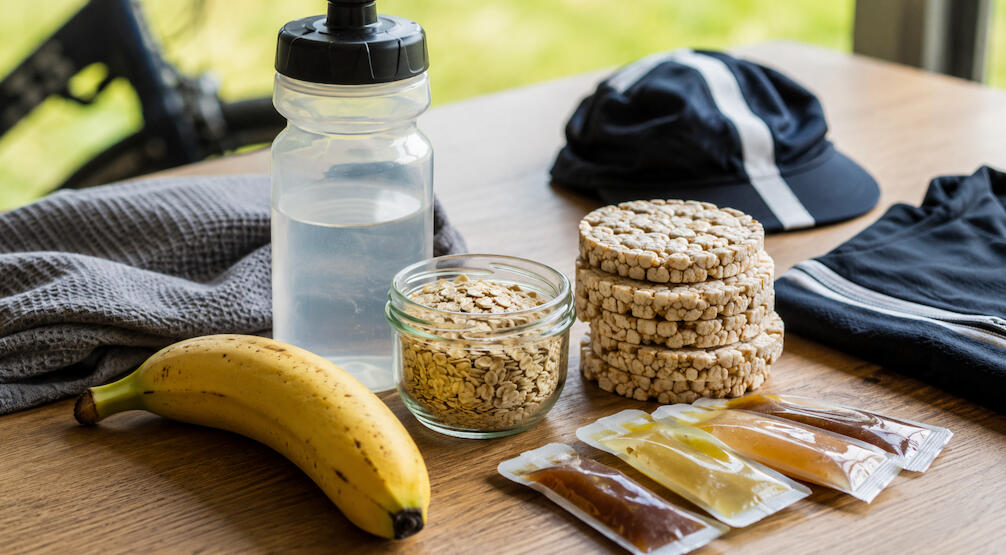
Most cyclists don’t underperform because they’re lazy. They underperform because they’ve accidentally gone out under-fuelled, under-prepared and hoping a coffee will do the work of breakfast.It’s one of the simplest mistakes in cycling, and one of the most common.You ride well for the first hour, then the legs start to go flat. Your concentration drops. Small climbs feel bigger than they should. You start blaming your fitness, your bike, your week at work, or the mysterious curse of “bad legs”.Sometimes, yes, you’re tired. Sometimes the training load is too high. But quite often, the problem is much less dramatic.You didn’t eat enough.Fuelling isn’t just for elite riders, racers or people with matching bottles and a suspicious amount of aero kit. It’s basic ride management. If you want to train well, ride strongly and recover properly, you need to give your body something to work with.TL;DR
For short easy rides under an hour, you may not need much more than normal food and water. For harder or longer rides, eat a carbohydrate-based meal 2 to 3 hours before, then start fuelling early during the ride. A simple guide is around 30g of carbohydrate per hour for rides over 60 to 90 minutes, 30 to 60g per hour for longer steady rides, and 60 to 90g per hour for hard or long rides once your stomach is used to it. Don’t wait until you feel empty. By then, you’re already chasing the problem.I used to underestimate nutrition too
I’ll be honest: nutrition has only become a major focus for me relatively recently, certainly compared with how long I’ve been riding.Years ago, especially back in the 80s and 90s, we just didn’t think about fuelling in the same way. You went out, rode hard, maybe stopped at a café, had a bit of cake or a piece of toast, and carried on. That was cycling.Nobody was talking much about grams of carbohydrate per hour, fuelling strategy, glycogen stores or recovery nutrition. The information existed in places, but for ordinary riders it wasn’t widely understood or properly applied.Looking back now, it’s obvious how much we neglected it.I often wonder how many performances were limited not by fitness, toughness or form, but by what I didn’t eat. Not just during the ride either. Sometimes the damage was probably done the day before, or even across several days of poor fuelling.That’s why nutrition has become so important to me as a coach. I’ve experienced both sides of it: years of riding and racing without giving fuelling enough respect, and now seeing how much better riders can train, race and recover when they get the basics right.Call it learning. Call it development. Call it being slightly late to a very useful party.But I’d now put nutrition right alongside the training itself. You can have the best session in the world written down, but if the rider turns up under-fuelled, tired and running on yesterday’s poor choices, the session won’t deliver what it should.Fuelling doesn’t replace training. But it allows the training to work.Why cyclists need fuel in the first place
Cycling uses energy. That sounds obvious, but plenty of riders behave as if the body runs on character, caffeine and stubbornness.For easy rides, your body can use a mix of fat and carbohydrate. The harder you ride, the more you rely on carbohydrate. That’s why fuelling matters more when the ride is long, hard, hilly, fast, or full of repeated efforts.Carbohydrate is stored in the body as glycogen, mainly in your muscles and liver. Those stores are useful, but they’re not unlimited. Once they start running low, your power can drop, your mood can dip, your focus can go and your ride can unravel quite quickly.That classic cycling feeling where everything suddenly becomes awful has a name: bonking. It’s not heroic. It’s just poor planning with better branding.What should you eat before a ride?
The best pre-ride meal is boring in the best possible way.You want food that gives you energy, digests well and doesn’t start a civil war in your stomach halfway up a climb.For most longer or harder rides, aim to eat a proper meal around 2 to 3 hours before you start. Keep it mainly carbohydrate-based, with a little protein if you want, and avoid making it too heavy.Good options include:• Porridge with banana or honey
• Toast or bagels with jam, honey or peanut butter
• Rice or pasta with a simple sauce
• Cereal and milk or yoghurt
• Potatoes with eggs or lean protein
• A banana and yoghurt if you need something lighterThe goal isn’t to feel stuffed. The goal is to start the ride topped up, comfortable and ready.If you’re riding early and can’t face a full breakfast, go smaller. A banana, slice of toast, cereal bar or small bowl of cereal is better than heading out empty and pretending you’re “training fat metabolism” when really you just forgot to eat.What should you avoid before a ride?
Before a hard ride, don’t get clever.Avoid big, greasy meals. Avoid food that’s very high in fibre if your stomach doesn’t tolerate it well. Avoid trying something new before an important ride, race or event.That giant fry-up might be emotionally supportive, but it’s not always performance-enhancing.The same goes for suddenly testing a new energy product, pre-workout drink or heroic homemade flapjack on the morning of a big ride. Training rides are for testing. Event day is for using what already works.Do you need to eat during every ride?
No. This is where riders can overcomplicate things.For an easy ride under about 60 minutes, you may not need any food during the ride, especially if you’ve eaten normally beforehand. Water may be enough.But once the ride gets longer, harder or more intense, fuelling becomes more important. You’re not eating because you’re weak. You’re eating because you want to keep riding properly.A simple starting guide looks like this:• Easy ride under 60 minutes: usually water is enough
• 60 to 90 minutes steady or hard: aim for around 30g carbohydrate per hour
• 90 minutes to 2.5 hours: aim for around 30 to 60g carbohydrate per hour
• Long or hard rides over 2.5 hours: aim for around 60 to 90g carbohydrate per hour if you’ve practised itThe key phrase is if you’ve practised it.You don’t jump from eating half a banana on a three-hour ride to taking 90g per hour overnight. Your stomach needs training too.What does 30g of carbohydrate actually look like?
This is where it becomes useful.Riders often hear “30g of carbs” and immediately lose interest because it sounds like homework. In practice, it’s simple.Roughly 30g of carbohydrate is about:• One large banana
• One energy gel
• One 500ml bottle of sports drink, depending on mix strength
• One small jam sandwich
• A couple of fig rolls
• A small energy bar
• A few handfuls of jelly sweetsYou don’t need perfect maths. You need a plan that’s close enough to keep you fuelled.For example, if you’re doing a two-hour hard ride and want around 30 to 45g per hour, you might take:• One bottle with carbohydrate drink
• One banana
• One gel or barThat’s not complicated. It’s just better than leaving the house with one bottle of water and blind faith.Start eating before you feel bad
This is one of the biggest takeaways.Don’t wait until you feel hungry. Don’t wait until your legs go flat. Don’t wait until you’ve already started riding badly.Start early.For longer rides, begin fuelling within the first 30 minutes, then keep feeding little and often. A small amount every 20 to 30 minutes is usually better than ignoring it for two hours and then panic-eating three gels at the side of the road like a raccoon in Lycra.The aim is to prevent the dip, not rescue yourself after it happens.Match the fuel to the ride
Not every ride needs the same fuelling.A gentle recovery spin is different from a hard chain gang. A café ride is different from a race. A short endurance ride is different from four hours in the hills.Use this simple rule:The longer or harder the ride, the more deliberate your fuelling needs to be.For short easy rides, keep it simple. For long rides, bring enough food. For hard rides, don’t be afraid of carbohydrate. For races or intense sessions, practise the exact fuelling you plan to use.Where riders go wrong is treating every ride the same. They under-fuel the hard ones, overthink the easy ones, and then wonder why their training feels inconsistent.Simple fuelling examples
Here are a few practical examples you can actually use.For a 60-minute easy spin
Water is probably fine if you’ve eaten normally.For a 90-minute steady ride
Have a normal meal beforehand. Take water and one small carbohydrate source, such as a banana, gel, bar or sports drink.For a two-hour hard ride
Eat a carbohydrate-based meal 2 to 3 hours before. Take two bottles if needed, with one containing carbohydrate drink. Bring a bar or gel. Start fuelling in the first 30 minutes.For a three-hour endurance ride
Eat properly beforehand. Take enough food for roughly 30 to 60g carbohydrate per hour. That might mean sports drink, bars, bananas, rice cakes, fig rolls, gels or sandwiches. Eat regularly from early in the ride.For a race or very hard group ride
Don’t start hungry. Don’t rely on eating only when things calm down, because they may not calm down. Use carbohydrate drink, gels or easy-to-open food. Practise this in training first.Don’t confuse weight loss with performance fuelling
This is important.Some riders under-fuel because they’re trying to lose weight. That can be understandable, but it often backfires.If you under-fuel hard training, the session quality drops. You may feel flat, recover poorly, crave more food later, sleep worse and lose consistency. That’s not smart weight management. That’s making training harder and less effective.If body composition is a goal, deal with it across the whole week. Don’t sabotage your key rides by starving the work that’s supposed to make you fitter.Fuel the training that matters. Be sensible with the rest of the day.That’s a much better approach than riding badly on purpose and calling it discipline.Fuel for the work you’re doing
This is where some riders, especially performance-focused riders, can get nervous.Traditionally, a lot of cyclists have been cautious around food. Some riders worry about gaining weight, bulking up, or losing that feeling of being light on the bike. I understand that. Power-to-weight matters, especially in climbing and racing. But there’s a big difference between eating intelligently and simply not eating enough.At the end of the day, the body still needs fuel. You wouldn’t expect a car to run properly with no petrol in the tank, yet cyclists often expect their legs to produce good power with very little energy going in.The answer isn’t to eat everything in sight. It’s to match your food to your training.On harder training days, longer rides, races or interval sessions, you need enough carbohydrate to support the work. That might mean a proper carbohydrate-based meal before the ride, fuel during the session, and a sensible recovery meal afterwards with carbohydrate and protein.On easier days or rest days, you may not need as much carbohydrate. That doesn’t mean starving yourself. It might simply mean focusing more on protein, vegetables, fibre, healthy fats and overall food quality, while reducing the amount of high-carbohydrate food because the training demand is lower.That’s the balance.Fuel the hard work properly. Eat sensibly around easier days. Don’t turn every meal into a performance crisis, but don’t under-fuel the sessions that are supposed to make you fitter.Good nutrition isn’t about eating more all the time. It’s about eating appropriately for the day, the ride and the rider.Hydration still matters
Food isn’t the only part of fuelling.If you’re riding for longer, riding hard, or riding in warm weather, fluid matters too. Dehydration can affect how you feel, how you perform and how well you tolerate food.You don’t need to turn every ride into a chemistry experiment, but you do need to drink. In cooler weather, plain water may be enough for shorter rides. In warmer conditions, longer rides or sweaty indoor sessions, electrolytes can help, especially if you’re losing a lot of salt.A good practical check is simple: if you come back from a ride with full bottles, a dry mouth and a headache, your hydration plan probably wasn’t a plan.Train your stomach as well as your legs
This is a detail many riders miss.Your gut adapts. If you rarely eat on the bike, then suddenly try to fuel heavily during a sportive, race or long event, you may feel bloated, sick or uncomfortable.So practise.Start with smaller amounts and build gradually. Try different foods. Learn what opens easily, what sits well, what tastes good after two hours, and what turns into pocket cement in the rain.Good fuelling is partly physiology and partly logistics. Can you reach it? Can you open it? Can you chew it while breathing hard? Does it make you feel better or worse?That matters more than the label on the wrapper.Common fuelling mistakes cyclists make
Most fuelling problems are not complicated. They’re usually one of these:• Starting a long or hard ride under-fed
• Eating too late
• Taking food but not actually eating it
• Trying new food on event day
• Using only water for hard rides over 90 minutes
• Forgetting that indoor sessions can need fuel too
• Chasing weight loss during key training rides
• Drinking too little
• Eating a huge meal too close to the start
• Assuming bad legs are always a fitness problemThe annoying thing is that most of these are easy to fix. Which is good news, unless you enjoy suffering unnecessarily.A simple plan for your next ride
Here’s the practical bit.Before your next ride, ask three questions:How long am I riding?
Under an hour, 90 minutes, two hours, or longer?How hard will it be?
Easy endurance, steady, intervals, group ride, race, hills?What will I eat and when?
Not vague nonsense like “I’ll take something”. Decide before you leave.For example:“I’m riding two hours with efforts. I’ll eat porridge two hours before, take one carb bottle, one gel and one bar, and start fuelling after 25 minutes.”That’s a plan.Not perfect. Not elite. Just useful.Coach’s note
A lot of cyclists are much tougher than they need to be. They’ll suffer through a horrible ride, grind themselves into the road, come home shattered and call it character-building.Sometimes that’s true. But sometimes they were just under-fuelled.There’s no prize for doing a hard session badly because you didn’t eat. If the session matters, fuel it. If the ride is long, plan it. If you keep fading after 90 minutes, don’t immediately blame your fitness. Look at your bottles, your pockets and what you ate before you left.The best riders don’t just train hard. They manage the basics well.Fuelling is one of those basics.Key takeaways
• Short easy rides under an hour may only need water if you’ve eaten normally.
• Longer or harder rides need a proper fuelling plan.
• Eat a carbohydrate-based meal 2 to 3 hours before important rides.
• Start fuelling early, usually within the first 30 minutes on longer rides.
• For many rides over 60 to 90 minutes, 30 to 60g carbohydrate per hour is a sensible range.
• For longer or harder rides, 60 to 90g per hour can work well, but practise it gradually.
• Fuel harder training days properly, then eat more sensibly around easier or rest days.
• Don’t confuse under-fuelling with discipline.
• Don’t blame fitness until you’ve checked whether you actually ate enough.
About the authorAndrew Layhe is a cycling coach with over 40 years of racing experience across road, cyclocross and mountain biking. He is the founder of Precision Cycling Coaching and writes the Coach's Notebook series to help riders train smarter and race better.
Want help making your training feel more consistent?Precision Cycling Coaching helps riders understand their training, fuelling, recovery and performance habits so they can stop guessing and start improving.If you want coaching that looks beyond the numbers, please get in touch.