Don't Repeat Your 2026 Cycling Season.
Here's How to Make 2027 Better.
Planning Your 2027 Cycling Season? Learn How to Avoid Common Training Mistakes, Build a Smarter Plan and Get Better Results.
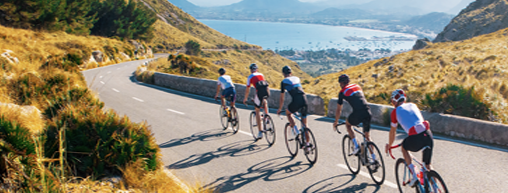
If you want to make real progress on the bike in 2027, now's a good time to look back at what happened this year. Not just the results, but how you trained, where you improved and what kept holding you back. Simply doing more of the same isn't necessarily going to make you a better cyclist. Sometimes the biggest gains come from recognising what needs to change and making a few smarter decisions about your training.
There's something about this time of year that gets cyclists thinking about what's next. The racing season is winding down for many, next year's events are starting to appear on the calendar and there's that familiar feeling of wanting to come back a little stronger.
Before long, the conversations turn to winter training. More endurance work, a few gym sessions, perhaps another hour or two on the turbo. Everyone's got an idea about what they should be doing.
Yet it's surprising how often riders end up following almost exactly the same routine as the previous winter. Same sessions, same weekly structure, maybe a little more volume or intensity thrown in for good measure.
And there's nothing wrong with sticking with something that works.
But what if it didn't quite work?
What if you trained consistently throughout 2026, put in plenty of hours and still found yourself struggling with the same things when it mattered?
That's where I'd start before thinking too much about what your winter training should look like.
1. What Actually Held You Back This Year?
When a new rider comes to me, I'm always interested in looking through their previous training. Not because I want to pick holes in what they've been doing, but because there's usually a lot we can learn from it.
Training hours and FTP figures are useful, of course, but they only tell part of the story. What interests me more is how that fitness translated into actual performance.
Maybe you were going well in training but struggling to respond when the pace changed in races. Perhaps you could ride comfortably for three hours, only to fade badly towards the end of a sportive. Or maybe you reached your biggest event of the year feeling strangely flat, despite having completed all the training you'd planned.
These situations might look similar from the outside, but the reasons behind them can be quite different.
I've come across riders who are convinced they need to improve their FTP, yet when you start looking more closely at their race files, the problem isn't necessarily a lack of power. It might be how they're pacing themselves, the amount of time they're spending above threshold, or even something as straightforward as not eating enough.
That's why I like to get into the detail of a rider's files. Where did things start to unravel? What happened in the hour beforehand? Was the rider already carrying fatigue into the event?
You can learn a surprising amount from those patterns.
And sometimes the answer isn't another training session. It's recognising that the rider already has the fitness to perform better, but isn't quite making the most of it.
Before deciding what to improve in 2027, it's worth making sure you're trying to solve the right problem.
2. What Does Getting Faster Actually Mean to You?
It's something I hear regularly when talking to cyclists about their goals.
"I just want to get faster."
Which is fair enough. Who doesn't?
But there's a big difference between getting faster up a five-minute climb and being able to ride strongly for six hours. The same applies to someone trying to improve their sprint or survive repeated attacks in a road race.
They're all forms of improved performance, but they don't necessarily come from doing the same training.
Imagine two cyclists who both have six hours a week to train. One wants to become more competitive in short road races, while the other has entered a mountainous sportive next spring.
Both need a good aerobic foundation, but beyond that, their priorities begin to look quite different.
The road racer needs to cope with repeated changes of pace, hard accelerations and the ability to recover while still riding quickly. The sportive rider needs to manage their effort over several hours, climb efficiently and maintain enough energy to finish strongly.
If I were coaching those two riders, I wouldn't simply give them the same programme with a few sessions moved around.
I'd want to understand the demands of their events and work backwards from there.
It's an approach I use regularly because it gives the training a purpose. Instead of simply trying to improve every aspect of fitness at once, we can concentrate on what will make the greatest difference when it matters.
After all, there's not much point becoming brilliant at completing turbo workouts if they aren't helping you achieve what you set out to do.
3. Plan Around Your Life, Not the Other Way Around
One of the easiest traps to fall into when planning a new season is being a little too optimistic about how much training you'll manage.
You look ahead at the winter months and decide this is the year you're really going to commit. Maybe eight hours becomes ten, or you plan to squeeze in an extra session before work.
For the first couple of weeks, everything goes well.
Then life happens.
Work gets busy, something comes up at home, sleep suffers and suddenly you're trying to rearrange sessions or squeeze missed workouts into an already full weekend.
It's a familiar situation, and it's one reason I put so much emphasis on building training around the time a rider genuinely has available.
Six hours of consistent, well-structured training can achieve an awful lot. In fact, I'd much rather see someone complete six good hours most weeks than continually chase ten and end up frustrated when they can't manage it.
When I'm reviewing a rider's schedule, I'm not always looking for ways to add more training. Quite often, I'm looking at whether everything they're doing actually needs to be there.
Are they riding too hard on days that should be easy? Are several sessions doing much the same job? Is fatigue from one workout affecting the quality of the next?
Sometimes removing a session or changing the order of the week can make more sense than adding another hour.
Good training has to be sustainable. If it constantly leaves you feeling guilty about what you haven't done, there's probably something wrong with the plan rather than your commitment.
4. Being Tired Isn't the Same as Getting Fitter
Cyclists have a funny relationship with fatigue.
Finish a big week with heavy legs and there's often a feeling of satisfaction. You've put the work in, you've pushed yourself and surely that means you're making progress.
Sometimes it does. But not always.
Training is only part of the process. Your body still needs time to recover and adapt to what you've asked it to do.
This is something I keep a close eye on with the riders I coach. The power and heart-rate data tell me plenty, but I'm just as interested in how someone felt during a session.
A rider might complete all the prescribed intervals, yet mention that their legs felt unusually heavy. Another might report poor sleep or that a normally manageable workout suddenly felt much harder than expected.
One difficult day isn't necessarily a concern. We all have them.
But when those comments start appearing regularly, particularly alongside changes in performance or recovery, it's worth looking more closely.
There are times when I'll move a session, reduce the intensity or give someone an extra recovery day. Not because the rider has failed to complete the plan, but because the plan needs to reflect what's happening.
And that's something worth remembering if you're planning your own training.
A programme written in November can't possibly account for every stressful week, illness or poor night's sleep between now and next summer.
Sometimes being sensible enough to back off is what allows you to come back stronger.
5. Don't Get Too Caught Up in Winter Training Trends
Every winter, certain training topics seem to dominate cycling conversations.
Zone 2, sweet spot, strength training, polarised training. There's always a debate about which approach is best and how much of it you should be doing.
The trouble is that riders can become so focused on following a particular method that they forget to ask whether it's actually what they need.
Someone coming to the end of a demanding cyclocross season may need a proper break before beginning another block of structured training. A road cyclist who's spent months doing short, intense rides might benefit from rebuilding their endurance. Another rider may need to improve their ability to sustain power on longer climbs.
And then there are the things that don't always get as much attention.
Take a cyclist who regularly struggles towards the end of long sportives. It's easy to assume they need more endurance, and perhaps they do.
But suppose they're riding the first few climbs far too hard and barely eating during the opening two hours.
You could give that rider another three months of training and they might still encounter exactly the same problem.
That's the sort of thing I find interesting when analysing performance. Sometimes the biggest opportunity isn't hidden in a complicated training metric. It's something quite practical that nobody has properly looked at.
There's a place for all the different training methods, but I wouldn't choose one simply because it's popular.
I'd rather understand what a rider needs and build from there.
6. Start With Your Important Events and Work Backwards
If you've already entered a big sportive or have a particular race in mind for April or May, you've got a useful starting point for planning the months ahead.
And no, that doesn't mean you need to start hammering out hard intervals in November.
For many riders, this is a good time to recover from the previous season, settle into a consistent routine and begin addressing some of the areas that need attention.
As the months progress, the training can gradually become more specific.
I tend to work in manageable blocks, each with a purpose. Early on, that might involve aerobic development, strength work and getting some consistency into the week. Closer to the important events, we'll introduce sessions that better reflect the efforts the rider is likely to face.
For a sportive rider, that could mean longer sustained climbing efforts and practising fuelling during extended rides. For a road racer, it might involve repeated accelerations and learning to produce hard efforts after already accumulating fatigue.
The important thing is that there's a progression towards something.
Of course, plans rarely unfold perfectly.
Work commitments change, riders get ill, races are added or removed from the calendar. Sometimes someone responds particularly well to a training block, while another area takes longer than expected.
That's why I prefer to treat a training plan as something we keep reviewing rather than a document that has to be followed regardless of what's happening.
The aim isn't to complete every workout at all costs. It's to arrive at your important events properly prepared and fresh enough to perform.
7. How Will You Know If It's Working?
Once you've decided what you want to improve, it helps to have a way of measuring whether you're making progress.
That doesn't mean testing your FTP every fortnight or obsessing over every number in TrainingPeaks.
In fact, some of the most useful improvements can be easy to overlook if you're only watching one figure.
Maybe you're producing slightly more power at the same heart rate and perceived effort. Perhaps you're recovering more quickly between hard efforts, or you can maintain your pace on a long climb without fading towards the top.
Those are all encouraging signs.
I like comparing similar sessions over time because they give us a better picture of how a rider is developing. A single test has its place, but looking at patterns across several weeks can often tell us more.
The key is choosing measurements that relate to what you're actually trying to achieve.
If your goal is to ride a mountainous sportive strongly, improvements in your ability to sustain an effort over a long climb may be more meaningful than a small increase in your best five-minute power.
Likewise, if you're racing, being able to respond to repeated accelerations might matter far more than producing a new FTP figure on the turbo.
There's more than one way to become a better cyclist. Make sure you're recognising the improvements that count.
Five Questions Worth Asking Before You Start Training for 2027
If you're already thinking about next season, I'd encourage you to spend a little time looking back before deciding what comes next.
Here are five questions I'd start with:
- What did you hope to achieve in 2026? And looking back, how close did you actually get?
- Where did you struggle most? Think about the moments in races, sportives or harder rides when things didn't go to plan.
- What really matters to you in 2027? Identify the events or challenges you'd most like to perform well in.
- How much time can you genuinely commit? Be realistic about work, family and everything else competing for your time.
- What needs to change? If you followed much the same training as last year, would you expect a different outcome?
You don't need an elaborate spreadsheet or a perfectly mapped-out calendar to answer those questions.
A little honest reflection can be a very useful starting point.
Give Yourself a Better Chance in 2027
I always enjoy this stage of the cycling year. There's a chance to reflect on what's happened, set some fresh goals and begin thinking about how to approach the months ahead.
But I'd encourage you not to rush straight into another winter of familiar training without first considering what you could do differently.
Maybe you need to develop a particular area of fitness. Perhaps you need a more realistic weekly schedule, better recovery or a clearer understanding of why certain events didn't go as planned.
Whatever it is, identifying the problem is a good place to begin.
It's also a big part of what I do at Precision Cycling Coaching.
When I work with a rider, I want to understand their training history, their goals and what happens when they put that training into practice. I'll look through their ride and race files, identify areas where I think we can make improvements and build a programme around the time they have available.
And we keep talking and reviewing things as the season develops. Sometimes we push the training forward, sometimes we adjust the focus, and occasionally the smartest decision is to do a little less.
There's no magic formula, and I wouldn't pretend there is. But having a clear direction, knowing why you're doing particular sessions and making adjustments when they're needed can make a real difference over the course of a season.
If you're thinking about your cycling goals for 2027 and would like some help putting a plan together, get in touch.
Whether you're targeting road races, cyclocross, a big sportive or simply want to get more out of the hours you spend on the bike, I'd be happy to have a chat.
Tell me what you're aiming for, what your training looks like at the moment and where you feel you're struggling. We can take it from there.
Contact Precision Cycling Coaching directly today.
Don't just repeat last season. Give yourself a better chance of making the next one count.
About the author
Andy Layhe is the founder of Precision Cycling Coaching, bringing almost 40 years of racing experience across road, cyclocross and mountain biking. A performance coach and former Irish National Team Manager, he works with riders of all levels to improve performance through structured, individual coaching.